
Forget One-Size-Fits-All: The Best Room Cooling Units for Hotels, Data Centers, and Warehouses in 2025

If you’re a distributor or wholesaler sourcing cooling units for commercial rooms, you already know the biggest mistake: treating every room the same. A hotel guest room runs at 24°C with low humidity and silent operation. A server room needs 18°C, 24/7 runtime, and precise airflow. A retail store wants energy efficiency and quick temperature recovery after doors open. One product cannot cover all that. This guide breaks down the top cooling units by industry, using real-world specs, performance data, and market trends that actually matter for B2B buyers in 2025.

Cooling Units for Hospitality: Hotels, Motels, and Guest Houses
The hospitality sector demands reliability, low noise, and aesthetics. Guests expect a quiet, cool room that doesn’t rattle or drip. For distributors, the hot products are PTACs (Packaged Terminal Air Conditioners) and split ductless units. PTACs dominate in North America because they fit into standard wall sleeves and allow easy replacement. In Asia and Europe, split systems are more common due to building design and lower installation costs.
Let’s get specific. The most popular PTAC models for hotels in 2025 are the LG LT series and the Carrier WeatherExpert series. LG’s LT-2424CN offers 24,000 BTU/h cooling with an EER of 10.8. That’s important because many US states now require a minimum EER of 11.0 for new commercial installations. Carrier’s 52FC series has a cooling capacity range from 7,000 to 15,000 BTU/h with an EER up to 11.5. These units come with electric resistance heat or heat pump options. For European hotels, the Daikin Emura FTXM series (split system) is a top seller — it delivers 12,000 BTU/h with a SEER of 7.1 (which equals about 24 SEER in US standards) and operates at 19 dB(A) on low fan speed.
A key trend: hotels are switching from R-410A to R-32 refrigerant. R-32 has a lower GWP (675 vs 2,088) and better thermodynamic efficiency. By 2026, R-410A production will be phased down under the Kigali Amendment. If your inventory still holds R-410A units, you need to plan replacement cycles. Here’s a quick comparison table for PTAC performance across top brands:
| Model | Cooling Capacity (BTU/h) | EER | Noise Level (dB) | Refrigerant | Typical Price Range (USD, wholesale) |
|---|---|---|---|---|---|
| LG LT-2424CN | 24,000 | 10.8 | 47 | R-410A | $850 – $1,050 |
| Carrier 52FC-15 | 15,000 | 11.5 | 44 | R-410A | $620 – $780 |
| Daikin Emura FTXM | 12,000 | SEER 7.1 (EU) | 19–38 | R-32 | €700 – €900 |
| Gree GWH09A | 9,000 | 12.0 | 41 | R-32 | $480 – $580 |
For hotels in warm climates, like Southeast Asia or the Middle East, units with a high cooling capacity and dust-resistant condensers are required. The Mitsubishi Heavy Industries SRK series is built for 52°C ambient operation. It comes with a gold-finish heat exchanger to prevent corrosion. That’s a competitive edge for distributors servicing coastal resorts.
One more thing: hotel chains are standardizing units across properties. If you can offer a single PTAC model (or split system) that fits 80% of their room sizes, you win bulk contracts. The sweet spot is 12,000–15,000 BTU/h for standard guest rooms. Avoid oversized units — they short-cycle, wear out faster, and kill comfort.
Cooling Units for Data Centers and Server Rooms
Data center cooling is a completely different ball game. You’re not cooling people; you’re cooling heat loads from servers, switches, and UPS systems. The room itself is often a confined space with high heat density. The top cooling units here are precision air conditioners (PACs) or computer room air handlers (CRAHs). These units must maintain temperature within ±1°C and relative humidity between 40% and 60%.
For small to medium server rooms (up to 500 sq ft), the preferred solution is a ceiling-mounted or wall-mounted precision unit. The Liebert (Vertiv) XDC series is the industry standard. The XDC 2400 delivers 24.5 kW (83,500 BTU/h) cooling capacity with a 16.0 EER. It uses R-454B refrigerant (GWP 466) and includes a variable-speed compressor. Another strong player is the Schneider Electric Uniflair LE series — specifically the LE204 with 20 kW cooling, direct expansion, and an integrated humidifier.
For large data centers, floor-mounted CRAC units (computer room air conditioners) with chilled water or glycol loops are typical. The Stulz CyberCool 2.0 series offers up to 150 kW with a 0.9 kW/ton energy ratio. That’s close to 14.0 EER. But for distributors, the real volume comes from the 5–30 kW range.
Here’s a critical data point: the 2024 ASHRAE thermal guidelines allow server inlet temperatures up to 27°C for newer equipment. That means you can use higher-temperature chilled water and save 20–30% on energy. But the cooling unit must have a modulating fan and a direct expansion coil that can handle higher return air temperatures. The Emerson (Copeland) variable-speed compressor is widely adopted in units from Liebert and Schneider.
A table of popular server room cooling units with typical wholesale pricing:
| Model | Cooling Capacity (kW) | EER | Form Factor | Refrigerant | Wholesale Price (USD) |
|---|---|---|---|---|---|
| Vertiv XDC 2400 | 24.5 | 16.0 | Ceiling mount | R-454B | $8,500 – $10,200 |
| Schneider Uniflair LE204 | 20.0 | 15.5 | Wall mount | R-410A (R-32 upgrade available) | $7,200 – $8,800 |
| Stulz CyberCool 2.0 (50kW) | 50.0 | 14.0 | Floor mount | R-134a (R-513A drop-in) | $15,600 – $18,400 |
| Mitsubishi Heavy City Multi (V4) | 28.0 | 17.2 | Ceiling cassette | R-32 | $9,100 – $11,500 |
Distributors need to know that server room cooling units require 24/7 operation and humidity control. If the unit can’t run at low load (e.g., 30% capacity), the compressor may short-cycle. Look for units with digital scroll compressors or inverter-driven compressors. Also, redundancy is key — N+1 configuration is standard. That means for every 10 kW of load, you need at least 11 kW of cooling capacity from two units.
Cooling Units for Medical and Pharmaceutical Facilities
Hospitals, clinics, and pharmaceutical storage rooms have the strictest requirements. Temperature must stay within 20°C to 24°C, humidity between 30% and 50%, and air purity must meet HEPA filtration standards. The cooling units used here are typically central chilled water systems with terminal units, but for individual rooms (e.g., operating theaters, pharmacy clean rooms), you need specialized split systems or package units with enhanced filtration.
The go-to products are the Trane IntelliPak series and the Carrier AquaForce 30XA chillers for central plants. For room-level cooling, the Liebert Challenger 3000 (Vertiv) is common in hospital IT and pharmacy rooms. It provides 14 kW cooling with HEPA bypass filtration, redundant fans, and a hot-water reheat coil. Another option is the Gree BORA series for clean rooms — it includes a UV-C light and anti-bacterial coating on the evaporator coil.
In 2025, the EU F-Gas regulation pushes medical facilities to use low-GWP refrigerants. The most common switch is from R-410A to R-32 or R-290 (propane). However, R-290 is flammable, so it requires certified installers and special room safety requirements. For distributors, R-32 units (like the Mitsubishi Electric M-Series) are easier to sell because they are non-flammable under A2L classification and already widely accepted in Europe and Asia.
Let’s look at a typical clean room cooling unit specification:
| Parameter | Requirement | Typical Unit Spec |
|---|---|---|
| Temperature stability | ±1°C | PID controller, variable speed compressor |
| Humidity control | ±5% RH | Hot-gas reheat or electric reheat |
| Air filtration | MERV 14 or HEPA | 4-stage filter bank (pre, carbon, HEPA, UV) |
| Refrigerant | GWP < 750 | R-32 (GWP 675) or R-454B (GWP 466) |
| Installation | Ceiling-mounted or floor-standing | Split system with line set up to 30m |
A real data point: the global medical cooling market is expected to grow at 6.2% CAGR from 2024 to 2030, driven by hospital expansion in Asia and the Middle East. If you’re a distributor, focus on units with integrated remote monitoring (BACnet or Modbus). Hospital facility managers want to see real-time temperature and humidity logs. Units like the Carrier AquaForce 61WG come with on-board controllers that link to BMS.
Cooling Units for Retail Stores and Restaurants
Retail cooling is all about speed, energy efficiency, and aesthetics. A restaurant kitchen is hot and greasy; a clothing boutique needs silent cooling with a sleek indoor unit. For food service, you need heavy-duty units that can handle 40°C kitchen temperatures and constant door openings. The top choice here is ducted or ductless high-wall split systems with corrosion-resistant coils. The Daikin SkyAir series is a workhorse — it offers cooling capacities from 12,000 to 48,000 BTU/h, with an outdoor unit that withstands corrosive environments (pre-coated fins). For large retail stores, rooftop units (RTUs) are still dominant, but mini-splits are taking over in smaller shops.
Key data: the U.S. Department of Energy updated its commercial AC efficiency standards in 2024, requiring rooftop units over 65,000 BTU/h to achieve an IEER (Integrated Energy Efficiency Ratio) of at least 11.0. For mini-splits, the minimum SEER2 is 15.0 in the south and 14.0 in the north. So if you are importing mini-splits, ensure they meet SEER2 16+ to stay competitive.
For chain restaurants (e.g., McDonald’s, Starbucks), they often use a central HVAC system with multiple zones. But for independent restaurants, the best seller is the LG DUALCOOL series with inverter technology. It offers 24,000 BTU/h with a SEER2 of 18.0. It also has a built-in air purifier — a selling point for post-COVID hygiene concerns.
Here’s a comparison of retail-focused cooling units:
| Model | Type | Capacity (BTU/h) | SEER2 / IEER | Features | Wholesale Price (USD) |
|---|---|---|---|---|---|
| LG DUALCOOL | Mini-split | 24,000 | SEER2 18.0 | Dual inverter, air purifier, Wi-Fi | $1,500 – $1,800 |
| Daikin SkyAir | High-wall | 36,000 | SEER2 16.5 | Corrosion-resistant, wide angle louver | $2,100 – $2,600 |
| Goodman 3-ton RTU | Rooftop | 36,000 | IEER 12.0 | Gas heat option, economizer | $3,200 – $3,900 |
| Mitsubishi City Multi VRF | Multi-zone | 48,000 | SEER2 17.0 | Heat recovery, up to 8 indoor units | $5,800 – $7,500 |
Ductless mini-splits are the fastest-growing segment in retail HVAC, with a projected 8% annual growth through 2027. Distributors should stock units with line sets pre-charged for up to 50 feet — that reduces installation labor and callbacks. Also, offer a 5-year compressor warranty; it’s a differentiator against cheap brands.
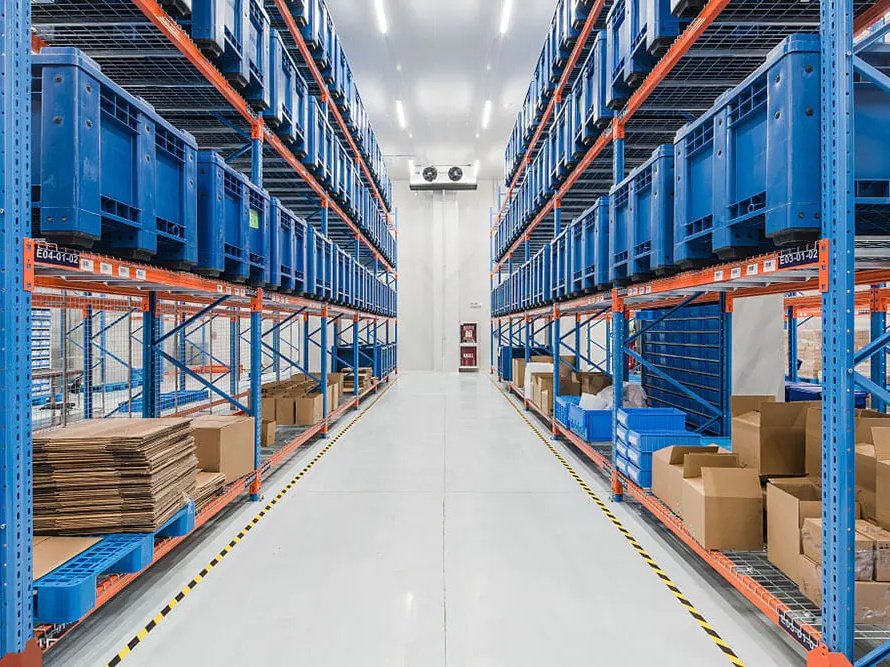
Cooling Units for Warehouses and Industrial Spaces
Warehouses, factories, and large open spaces need cooling that can handle high ceilings, poor insulation, and heat from machinery or people. You’re not cooling a room; you’re cooling a volume of air. The most effective solutions are evaporative coolers (swamp coolers) in dry climates and high-velocity fan-based cooling (HVLS fans) combined with spot coolers or ducted units. For temperature-sensitive storage (e.g., wine, electronics, dry goods), you need precision air conditioners or packaged units.
In arid regions like the Middle East or the US Southwest, evaporative cooling is 80% more energy-efficient than traditional AC. The Portacool Cyclone series is a top choice — it moves 20,000 CFM and drops temperature by 10–15°C in dry air. For humid regions, you need compressor-based units like the Carrier WeatherExpert 48HC series with variable-speed fans and hot-gas bypass for part-load efficiency.
For large warehouses (50,000+ sq ft), the standard approach is multiple roof-mounted packaged units or a central chiller with air handlers. The Trane Voyager 3 series is extremely popular in logistics centers. It offers 20–25 tons of cooling with an IEER of 11.5. It uses R-32 refrigerant (upgrade from R-410A) and includes a factory-installed economizer — which saves 20–30% on cooling costs in mild weather.
Industrial spaces with high heat loads (e.g., casting shops, bakeries) use unit coolers or spot coolers. The MovinCool Office Pro 60 is a portable air conditioner that delivers 60,000 BTU/h and can be moved around. It’s perfect for temporary cooling in a warehouse production line.
Let’s see a table for warehouse cooling options:
| Solution | Application | Cooling Capacity | Energy Cost (per hour, $0.12/kWh) | Best for |
|---|---|---|---|---|
| Evaporative cooler (20,000 CFM) | Dry climate, open area | 10–15°C drop | $0.40 | Arizona, Nevada, Saudi Arabia |
| Roof-mounted packaged unit (20 ton) | General warehouse | 240,000 BTU/h | $6.80 | Temperate climate, sealed building |
| Portable spot cooler (60,000 BTU/h) | Hot spot, temporary | 60,000 BTU/h | $2.10 | Near machinery, loading docks |
| Chilled water fan coil (10 ton) | High ceiling, controlled | 120,000 BTU/h | $3.40 | Cold storage, pharmaceutical |
For distributors, the volume opportunity is in packaged units for warehouses in the 5–20 ton range. Many warehouse operators are retrofitting old R-22 units with R-407C or R-448A drop-in replacements. But new construction is all R-32. Stock both options to cover retrofits and new builds.
Frequently Asked Questions (for Distributors)
Q: What is the biggest trend in commercial room cooling for 2025?
A: The switch to low-GWP refrigerants, especially R-32 and R-454B. Also, inverter-driven compressors are becoming standard, even in PTACs and RTUs. Expect energy efficiency standards to tighten — SEER2 15 is now the floor for mini-splits, and EER 11 is common for PTACs.
Q: How do I choose between a PTAC and a split system for a hotel project?
A: PTACs are easier to install and maintain — just slide into a sleeve. They cost less upfront but are less efficient (EER 10–11) and louder. Split systems have higher SEER (16–22) and quieter operation, but require wall penetration and professional installation. For new builds with a budget, go split. For renovations or budget hotels, PTAC is fine.
Q: My client wants a unit that can work in both cooling and heating modes — what should I recommend?
A: Look for a heat pump model, not a unit with electric resistance heat. Heat pumps have a COP of 3.0 or higher in mild climates, saving 60% on heating costs. Most split systems and PTACs now have heat pump options. For data centers, avoid heat pumps — you need dedicated cooling and separate electric reheat for humidity control.
Q: What certifications should I look for when importing cooling units?
A: For the US market, UL certification (UL 1995 for rooftop units, UL 484 for room air conditioners) is mandatory. Also, Energy Star certification helps with sales. For Europe, CE marking and ERP compliance (EU 2016/2281) are required. For the Middle East, SASO in Saudi Arabia and ESMA in UAE. Always verify that the unit’s electrical specs match local voltage and frequency (208-230V/60Hz vs 220V/50Hz).
Q: How do I handle warranty claims for imported units?
A: Set up a dedicated warehouse for spare parts — compressors, fan motors, and control boards. Many top brands now offer 5-year compressor warranties. If you’re selling private label under your own brand, you’re responsible for warranty. Partner with a local service network or train your own technicians. Also, document every unit’s serial number and installation date.
Q: Are there any tax incentives for energy-efficient cooling units?
A: Yes. In the US, the 179D tax deduction covers high-efficiency HVAC in commercial buildings. As of 2025, units with a SEER2 of 16 or higher (or EER 12 for PTACs) qualify. In Europe, the EU ETS and national subsidies (like France’s CEE) support low-GWP and high-efficiency systems. Check local regulations before quoting.
Q: What’s the average markup on commercial cooling units for distributors?
A: Typical gross margin ranges from 25% to 40% on standard units, and 15% to 25% on premium brands. On VRF systems, margins can be 30–45% due to installation complexity. For price-sensitive projects (like large hotel chains), margins drop to 10–15%, but volume makes up. Always offer aftermarket parts and service contracts to boost recurring revenue.