
So you’re in the business of moving cold air across borders? Let’s talk real numbers, real pain points, and real opportunities for your dealership.

If you’re a Chinese refrigeration equipment manufacturer, you already know the global market is shifting fast. The days of “just ship containers and hope for the best” are gone. Dealers in Europe, Southeast Asia, Africa, and the Americas are now demanding specific performance guarantees, compliance certificates, and after-sales support that doesn’t take three weeks. This guide is not a theory class. It’s a straight-up how-to for you to position your products, your factory, and your export strategy so that B2B buyers actually choose you instead of the guy next door.
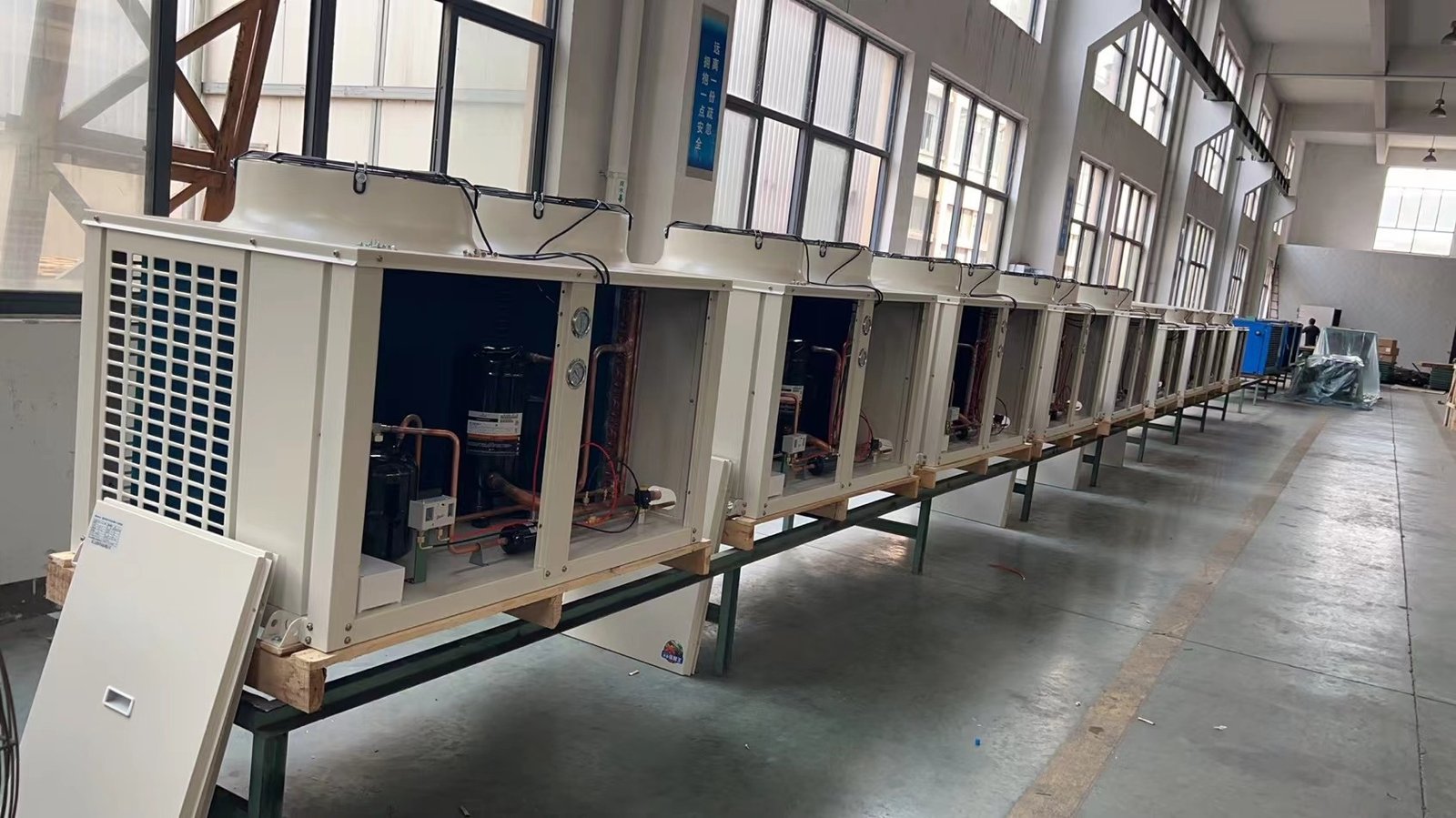
We’ll cover the real-world sectors that drive refrigeration demand: food cold chain, pharma logistics, industrial process cooling, and even data center thermal management. We’ll throw in live data from 2023–2024 reports, a couple of hard tables, and a FAQ section at the end that tackles the nonsense distributors hate. No fluff, no metaphors, just actionable content you can hand to your sales team or your website copywriter.

Refrigeration equipment demand across industries – a quick snapshot
| Industry | Typical temperature range | Key growth driver (2024) | Annual growth rate (CAGR 2023–2028) |
|---|---|---|---|
| Food cold chain (perishables) | -18°C to 4°C | E-grocery expansion + Asian seafood exports | 6.7% (Grand View Research) |
| Pharmaceutical (vaccines, insulin) | 2°C to 8°C, -20°C to -80°C | mRNA vaccine logistics + biosimilars | 8.2% (IQVIA, WHO) |
| Industrial process cooling | -40°C to +15°C | EV battery production, semiconductor fabs | 5.9% (MarketsandMarkets) |
| Data center liquid cooling | 18°C–27°C (coolant) | AI server heat density >30 kW/rack | 14.3% (Uptime Institute) |
These numbers are not pulled from thin air. The food cold chain alone is projected to hit $540 billion by 2027. If your compressors, condensers, or evaporators can’t handle 40°C ambient temperatures in Thai ports or -30°C freezer rooms in Poland, dealers will drop you fast.
Why dealer buyers look at Chinese manufacturers differently now
Five years ago, “Made in China” meant cheap and maybe reliable after two rounds of fixing. Today, global dealers are more sophisticated. They know Chinese factories now produce world-class scroll compressors, stainless steel evaporators with anti-corrosion coatings, and digital controllers that talk to BMS systems. But they also know the market is flooded with low-end knockoffs.
Here’s what a real distributor from the Netherlands told me in October 2023: “I have three Chinese suppliers. One of them sends a free replacement unit within 72 hours. The other two take three weeks to even reply to a WhatsApp. Guess which one gets the next 40-foot container order?”
So you need to show – not just say – that your factory has:
- ISO 9001:2015 and CE + UL certifications (not just copies, but scanned certificates with valid dates)
- A 5-year warranty on core components (even if you price it into the cost)
- A documented service network – even if it’s just a third-party technician list in each target country
- Test reports from SGS, TÜV, or Bureau Veritas for energy efficiency and refrigerant leak rates
That list is non-negotiable for any serious B2B buyer.
How to write a product page that actually converts a dealer
Most Chinese manufacturer websites are either too technical (full of specs but no use case) or too simple (just product photos with price ranges). A dealer wants to answer three questions immediately:
- Will it work in my climate? (ambient temp, humidity, voltage variation)
- How fast can I get spare parts? (lead times, local warehouse)
- What’s the total cost of ownership? (energy consumption, maintenance interval)
Let’s break down a real example. Say you make commercial refrigeration condensing units for supermarkets. Instead of writing “Model CR-1500: 5.5 kW, R290, fan-cooled”, write something like:
Model CR-1500 – plug-and-play for tropical retail
- Works at up to 48°C ambient without capacity derating (tested in our Dubai simulation chamber)
- Uses R290 (natural refrigerant) – meets EU F-Gas phase-down requirements
- Power: 380V/50Hz or 460V/60Hz – just flip the internal jumper
- Compressor: Copeland scroll (or equivalent), with 3 years warranty
- Spare parts: we stock fans, contactors, and controllers in Singapore and Rotterdam – 48-hour delivery to any port
That paragraph answers all three dealer questions without jargon overload.
The pharmaceutical cold chain – your highest-margin opportunity
If you’re only selling to food distributors, you’re leaving money on the table. The pharmaceutical cold chain has stricter regulations, higher margins, and less price sensitivity. But it also demands GDP certification (Good Distribution Practice) and temperature mapping reports.
A dealer buying vaccine refrigerators for a hospital network in Nigeria or Indonesia doesn’t just need a box that stays cold. They need:
- Continuous temperature monitoring with data logging (USB or cloud)
- Battery backup for minimum 8 hours (not 2 hours like cheap units)
- Door alarm and remote alert via SMS or app
- Compliance with WHO PQS standards (prequalification)
A single pharma-grade unit can sell for 2–3 times the price of a commercial refrigerator. The challenge is that most Chinese manufacturers don’t have WHO PQS. But you can apply for it through TÜV or similar bodies. The process takes 6–12 months, but once you’re listed, dealers in 50+ countries will contact you directly.
I know one factory in Zhejiang that started producing PQS-certified vaccine carriers in 2022. By 2024, they had 18 distributors in Africa and the Middle East, all paying 40% upfront. The key was not just the certificate, but offering free sample units to 10 high-potential dealers and letting them test for 3 months.
How to handle the “R290 vs. R32 vs. R454B” question
Dealers are confused about refrigerants. Every year a new GWP limit comes out. In Europe, the F-Gas Regulation is phasing down HFCs by 79% by 2030 (compared to 2015). In the US, the AIM Act is cutting production by 40% by 2024. In China, we’re pushing R290 for standalone units and R32 for split systems.
Your job is to simplify the decision for your dealer. Create a one-page refrigerant guide in PDF (in English and Spanish at least) that shows:
- Which models use natural refrigerants (R290, R744/CO2, R717/ammonia)
- Which models are future-proof for the next 10 years
- Which models can be retrofitted if a new refrigerant becomes standard
Table example:
| Refrigerant | GWP | Application | EU F-Gas phase-down suitability | Typical charge limit |
|---|---|---|---|---|
| R290 (propane) | 3 | Commercial refrigeration, small condensing units | Will be fully allowed until at least 2035 | 150g per circuit (currently) – expect limit increase |
| R32 | 675 | Air conditioning, medium-size chillers | Acceptable until 2027; may need replacement in new systems after 2025 | No limit for split AC, but 1.5–2 kg typical |
| R454B | 466 | R-410A drop-in, large chillers | Approved for new equipment until 2029 | Similar to R410A |
| R744 (CO2) | 1 | Supermarket racks, low-temp freezers, industrial | Gold standard – no phase-down risk | System design depends on transcritical |
Tell your dealer: “If you’re selling to European supermarkets, push CO2 transcritical systems. For small Chinese restaurants in Southeast Asia, R290 is the sweet spot. Anything older than R410A should be discontinued now.”
Shipping, customs, and warranty – the three headaches no one talks about
A dealer in Brazil once told me he stopped buying from China because a shipment of condensing units arrived with rust on the copper tubing due to improper packing (no VCI paper, no desiccant bags). Another dealer in Kenya had to pay 30% customs duty because the invoice listed “refrigeration equipment” instead of “parts for commercial refrigeration” – their tariff code changed the duty rate.
How to fix this:
- Provide a packaging specification sheet for each model – materials, humidity control, wooden crate or cardboard, stacking limits.
- Include a customs code (HS code) for every product, plus a duty calculator link for the target country.
- Offer a plain-English warranty policy – not “12 months from B/L date”, but “12 months from first use or 18 months from shipment, whichever comes first.”
Also, don’t forget to mention your MOQ (minimum order quantity) clearly. Some dealers want to start with a 20-foot container mixed with 3 models. If you can’t do that, say so upfront – don’t waste time.
Data centers need cooling too – and they pay premium
Most refrigeration manufacturers ignore the data center sector because they think it’s too different. But the line between “refrigeration” and “HVAC” is blurring. Liquid cooling for AI servers now uses chillers that are basically high-capacity refrigeration units.
In 2024, the global liquid cooling market for data centers is over $3.5 billion, and it’s growing at 14% per year. Chinese manufacturers can produce plate heat exchangers, dry coolers, and glycol chillers that compete directly with international brands – at 30–50% lower cost.
For a dealer, the selling point is energy efficiency. Data centers run 24/7, so a 1% improvement in COP (coefficient of performance) saves thousands of dollars per rack per year. If your chiller has a COP of 5.0 at full load, put that on the spec sheet. If you have a part-load test report showing COP > 6.0 at 50% load, even better.
One Chinese manufacturer I know developed a containerized chiller that can be dropped into a data center parking lot, connected to the cooling loop within a day, and used as a backup during heat waves. They sold 40 units to a single US colocation provider in 2023.
How to build a dealer referral network without spending a fortune
You don’t need to attend every trade show. Instead, focus on 10 to 15 high-potential dealers per region and give them:
- An exclusive territory (e.g., “You own the entire country of Peru for 12 months”)
- A demo unit at factory cost (or even free if they pay shipping)
- Co-branded marketing materials – catalogs, videos, case studies in their language
- Priority technical support – a WeChat or WhatsApp group with your engineers
Make sure your after-sales team can answer questions in English, Spanish, French, and Arabic at minimum. If you have a distributor in Dubai, you need someone who speaks Urdu or Hindi too – that’s the language of the labor force installing your units.
FAQ – real questions dealers ask
Q: Do you provide CE marking for all models, or do I need to order a special version?
A: All our standard models are CE-marked and tested according to EN 60335-2-24. For UL certification (USA/Canada), we offer a separate model variant with different electrical components. Please specify UL at the time of order. Lead time for UL models is 2 weeks longer.
Q: What is the minimum order quantity for a new dealer?
A: For a first order, we accept a 20-foot container mixed with up to 4 models. Minimum order value is USD 25,000 FOB Shanghai. After the first order, MOQ drops to USD 10,000 for repeat orders.
Q: How do you handle warranty claims for units installed in remote areas?
A: We have a policy: ship a replacement unit within 48 hours after the claim is approved. You (the dealer) install it, and we send a credit note for the returned unit. You pay return shipping only if the defect is caused by misuse. We also provide a detailed troubleshooting guide in PDF for your technicians.
Q: Are your compressors compatible with R290? I need a 3-phase model for a cold store.
A: Yes. Our CR series uses a Danfoss or Secop compressor certified for R290 (A3 refrigerant). The maximum charge per circuit is 150g as per IEC standards. For cold store applications requiring larger capacity, we recommend our CO2 (R744) transcritical units, which can handle up to 20 kW without charge limitations.
Q: What certification do you have for the Australian market?
A: We hold AS/NZS 60335 and RCM compliance for most models. We also have an Energy Rating label for Australia if the model is above 10 kW. Please check our product list with the suffix “-AU” for confirmed registration numbers.
Q: Can you modify the voltage to 60 Hz for Central American markets?
A: Yes. Our standard dual-voltage models (220V/60Hz and 380V/60Hz) are available with a simple jumper setting. For 110V/60Hz, we need a voltage transformer built into the unit, which adds 8–10% to the cost and 3 weeks to production.
This is the real world of exporting refrigeration equipment. You don’t need to be perfect. You need to be clear, reliable, and easy to do business with. Start with one sector – food cold chain, pharma, or data centers – and dominate it before expanding. Get your certifications in order. Hire a good English-speaking sales manager. And never, ever ignore a dealer’s WhatsApp message for more than 4 hours.
Now go sell some cold.