
So you’re a refrigeration equipment distributor looking to stock the right gear for your clients. Maybe you’ve got a customer building a new frozen food warehouse, another one running a pharmaceutical cold room, and a third needing a chemical reaction cooling system. They all ask the same question: “Should I go with a condenser unit or an evaporator unit?” But half the time they don’t even know what they’re really asking. Let’s cut through the jargon.
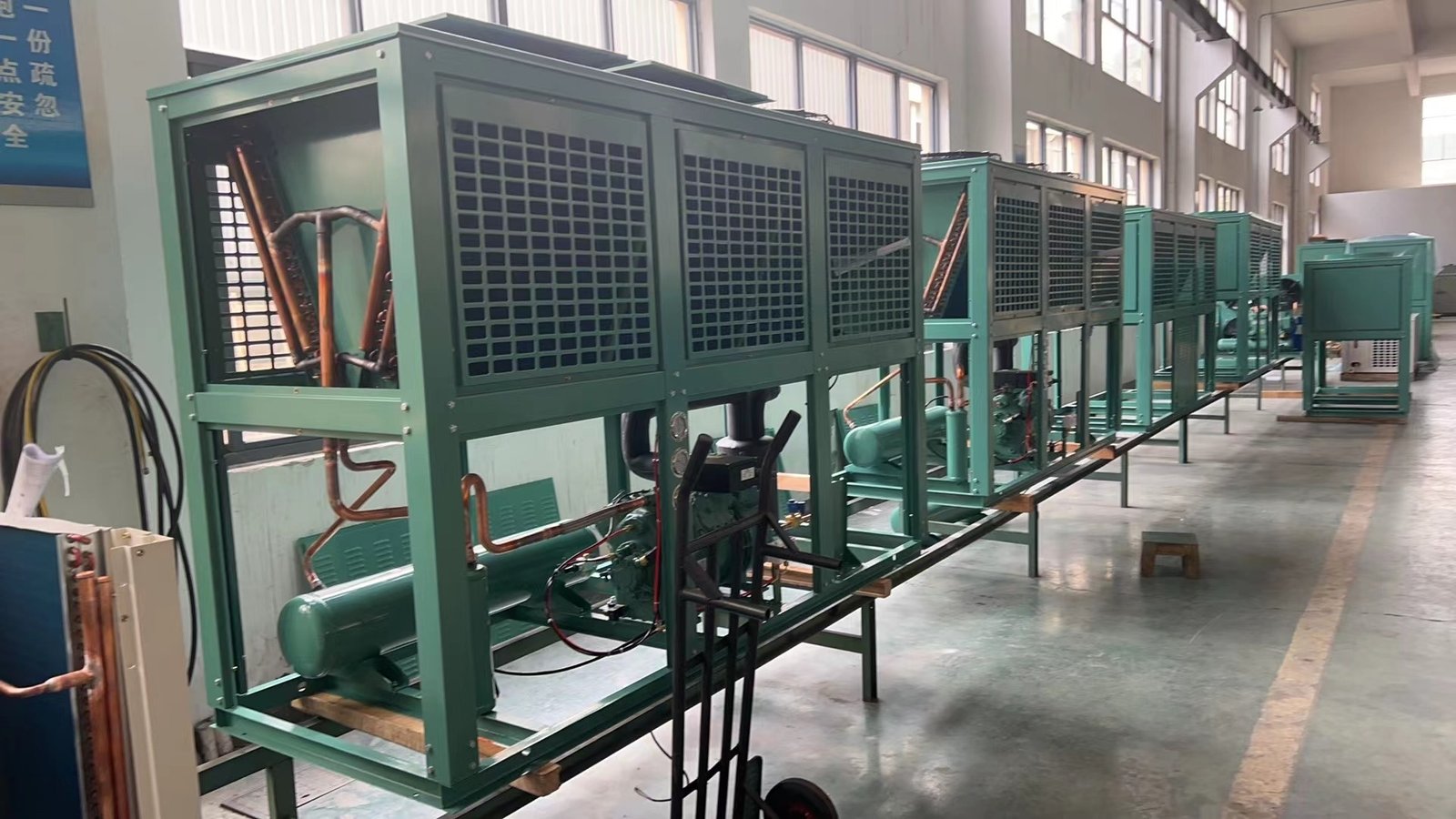
A condensation unit and an evaporator unit are two completely different pieces of hardware. They work together in a refrigeration cycle, but they handle opposite jobs. The condenser unit rejects heat to the outside air or water, while the evaporator unit absorbs heat from the space or product you want to cool. If you mix them up, you’ll either overheat the system or freeze the wrong side. For a dealer who supplies to multiple industries, understanding the real-world trade-offs is what separates a reliable partner from a commodity seller.

Let’s break it down by what actually matters to your clients: performance under real loads, installation complexity, long-term maintenance, and cost per ton of refrigeration.
What’s the Real Difference Beyond the Name?
You probably know the textbook definitions. But for a B2B buyer, the difference is about where the heat goes and how much energy it takes to move it.
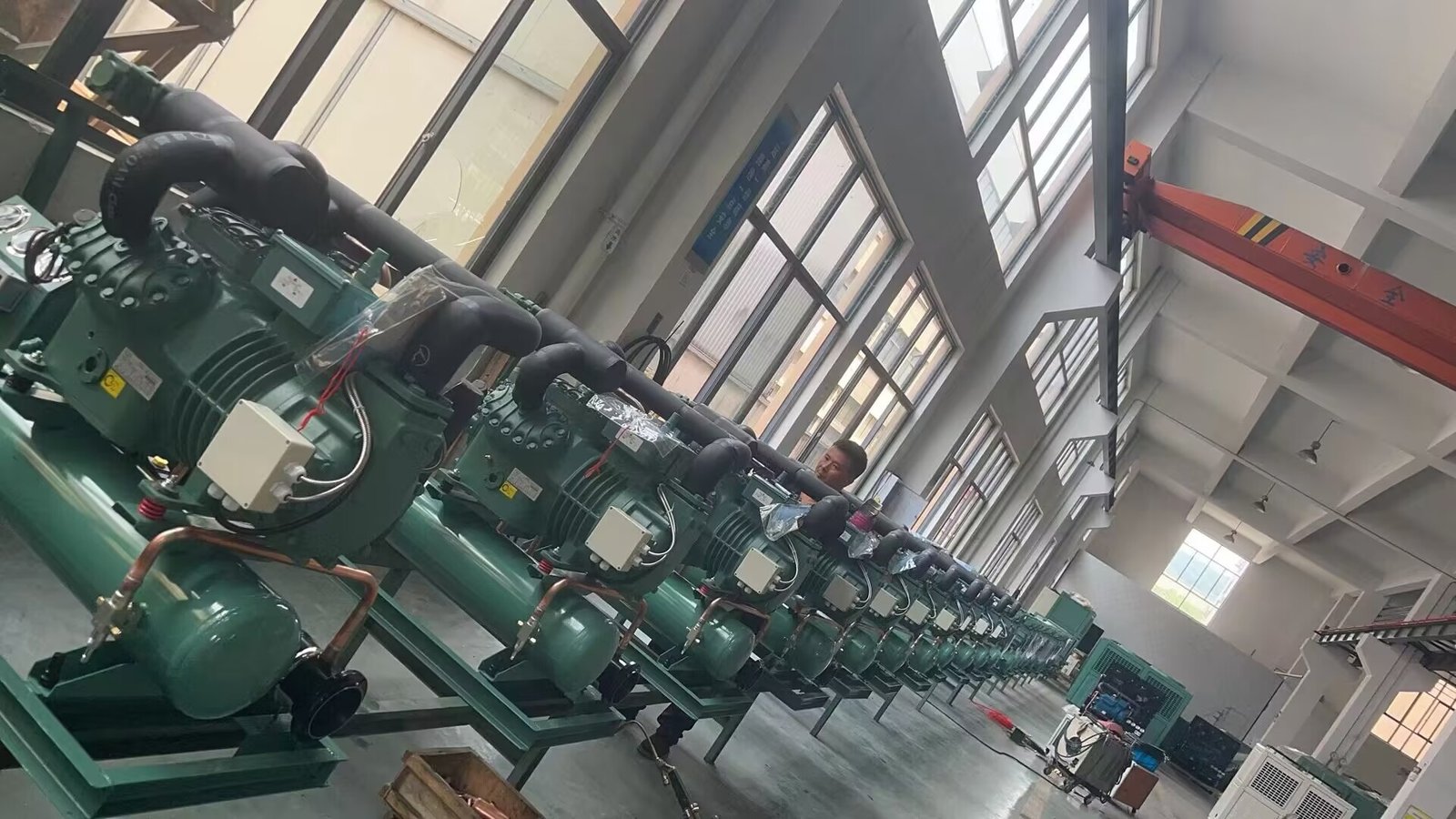
A condensation unit (often called a condensing unit) includes the compressor, the condenser coil, and usually a fan or water-cooled heat exchanger. It compresses hot refrigerant gas, then condenses it into a liquid by rejecting heat. It sits outside the cooled space, on the roof, or inside a machine room. Think of it as the “engine” that pushes the refrigerant.
An evaporator unit (or evaporator unit, sometimes called a cooling unit or evaporator coil) consists of an expansion valve, a coil, and a fan. It sits inside the cold room, freezer, or process line. Refrigerant evaporates here, absorbing heat from the air or product. The evaporator unit does the actual cooling work inside the space.
The biggest practical difference: the condensation unit is responsible for removing the total heat of rejection (which is higher than the cooling load due to compressor work), while the evaporator unit handles only the cooling load. That means the condensation unit is typically larger, noisier, and needs more ventilation. The evaporator unit is usually smaller, quieter, and subject to frost buildup.
For a distributor, you need to know that the two units must be matched. You can’t just pair any condenser with any evaporator. The refrigerant type, line lengths, and temperature differences all matter. That’s why many of your clients will buy them as a pair from the same manufacturer. But some experienced engineers prefer to mix brands for cost savings or specific performance curves.
Here’s a quick technical comparison table your clients might ask for when bidding a project:
| Parameter | Condensing Unit | Evaporator Unit |
|---|---|---|
| Primary function | Rejects heat from refrigerant | Absorbs heat into refrigerant |
| Components | Compressor, condenser coil, fan (or water-cooled), receiver, controls | Expansion valve, evaporator coil, fan, drain pan, sometimes heater |
| Location | Outdoor or machine room | Inside the cooled space (cold room, freezer tunnel, process line) |
| Typical noise level | 65–85 dB(A) depending on size | 45–65 dB(A) |
| Frost formation | None (runs above ambient) | Frequent (causes ice buildup, requires defrost cycles) |
| Maintenance focus | Compressor oil, coil cleaning, fan motor | Coil cleaning, drain cleaning, defrost system, fan bearings |
| Price per ton (2024 US market, USD) | $800–$2,500 | $300–$1,200 |
| Energy cost impact | High (compressor runs most of the time) | Moderate (fans and defrost heaters add to load) |
Note: those price ranges are rough estimates for medium-size systems (5–20 tons) using R404A or R449A. For ammonia or CO2 systems, multiply by 1.5–2.5.
How Different Industries Choose Between Them
Your clients aren’t all the same. A supermarket chain cares about defrost frequency and noise inside the sales floor. A food processor cares about precise temperature control and rapid pull-down. A chemical plant cares about explosion-proof ratings and compatibility with corrosive atmospheres. Let’s walk through three major sectors.
Cold Chain and Warehousing
For large cold storage (-18°C to -25°C for frozen, 0°C to +4°C for chiller), the condensation unit is almost always an outdoor air-cooled unit or a water-cooled unit if water is cheap. Evaporator units inside the warehouse are typically ceiling-mounted or wall-mounted with high air throw. The biggest headache for warehouse operators is defrosting. In a 1,000-pallet frozen warehouse, evaporator coils can ice up in hours if the door opens too often. You need hot gas defrost or electric defrost, and that extra heat adds to the cooling load.
Distributor tip: For warehouses in humid climates (like Southeast Asia or the Gulf), recommend oversized evaporator units with larger coil face area. That reduces frost buildup and stretches the time between defrost cycles. Your clients will thank you when their electricity bill drops 15% in the rainy season.
Food Processing and Bakeries
Food processing lines run at low temperatures but often have high door traffic and frequent cleaning cycles. Think of a chicken processing plant where carcasses go through a blast chiller. The evaporator unit must be stainless steel, IP65 rated for washdown, and have sloped coils to drain water. The condensation unit can be air-cooled but must be located away from dust and grease. In bakeries, you need to control humidity. If the evaporator unit pulls too much moisture out, bread crust gets tough. Some bakeries prefer evaporator units with high humidity coils (wide fin spacing) and low air velocity.
The real killer here is defrost scheduling. If the client runs 24/7, they can’t afford 4 defrost cycles a day that each last 30 minutes. That’s lost production. So you need to sell evaporator units with faster defrost options like hot gas bypass or adaptive defrost controllers that only defrost when needed.
Chemical and Pharmaceutical
Pharma cold rooms (+2°C to +8°C for vaccines) need absolute reliability. If the condensing unit fails, the entire batch of vaccines is lost. That’s why many pharma clients buy redundant systems – two condensing units for one evaporator unit, with automatic switchover. Also, the refrigerant choice is critical. R290 (propane) is common for small units because of its low GWP, but it’s flammable. In a chemical plant, you might need ATEX-rated evaporator units with spark-proof fans and intrinsically safe controls.
Condensing units for chemical applications often use water-cooled or remote air-cooled condensers with tube-in-tube heat exchangers to avoid fouling. If the plant has cooling tower water, that’s cheaper than air cooling. But water quality matters. Poor water can scale the condenser and kill the system in a year.
For pharma, the evaporator unit must be easy to clean (sanitary design, smooth internal surfaces) and often uses copper tubes with aluminum fins for light weight, but in wet environments they switch to all-copper or cupronickel.
Supermarkets and Retail
Supermarkets are unique because the evaporator units are inside the sales area, usually behind glass doors. Noise and condensation on the glass are big issues. Condensing units are often on the roof, where heat rejection adds to building HVAC load. In warm climates, supermarkets are switching to CO2 booster systems, where the condensing unit is replaced by gas coolers at high pressure. But for traditional setups, the condensing unit must be sized for the seasonal temperature swing. If the unit is undersized for 40°C summer days, the store’s freezers will struggle.
Retail clients care about energy labels and defrost frequency. Every store wants to advertise “green” but won’t pay triple for a CO2 system if the payback is 10 years. So you need to show them the trade-off: a high-efficiency scroll compressor condensing unit costs 20% more than a reciprocating unit but saves 25% on energy over 5 years.
Cost, Efficiency, and Maintenance – What Your Clients Care About
Let’s get into the numbers that matter to a purchasing manager. I’ve compiled data from recent projects in the US, Europe, and Southeast Asia. Keep in mind that refrigerant prices have been volatile since the R22 phase-out and the F-gas regulations.
Initial vs. Running Costs
A condensing unit costs more than an evaporator unit upfront, but it also dictates the system’s efficiency. The compressor alone can be 40-60% of the total cost. Here’s a typical breakdown for a 10-ton medium-temperature system (R404A, air-cooled):
| Cost Category | Condensing Unit | Evaporator Unit |
|---|---|---|
| Equipment purchase | $6,500 – $9,000 | $2,500 – $4,000 |
| Installation labor | $1,200 – $2,000 | $800 – $1,500 |
| Piping and refrigerant | $1,000 – $2,000 | $500 – $1,000 |
| Electrical and controls | $800 – $1,500 | $400 – $800 |
| Annual energy cost (8,000 hrs) | $12,000 – $16,000 | $3,500 – $5,000 |
| Annual maintenance | $600 – $1,200 | $400 – $800 |
| Expected lifespan | 10–15 years | 12–18 years |
Note that the evaporator unit has low annual energy cost because it’s just fans and defrost. But the condensing unit’s compressor runs continuously during cooling. So a 10% improvement in condensing unit efficiency (like using a high-COP screw compressor or variable speed drive) has a much bigger impact on total cost than a 10% improvement in evaporator fan efficiency.
Maintenance Reality
Your clients will call you screaming when the compressor fails mid-season. So here’s what to warn them about:
Condensing unit failures: Most common is compressor burnout due to liquid slugging or high discharge temperature. Causes: dirty condenser coil, low refrigerant charge, or oversized expansion valve. Solution: regular coil cleaning (monthly if near a dusty road), check subcooling, and install a suction accumulator.
- Evaporator unit failures: Number one issue is ice build-up blocking airflow. Causes: dirty coil, defective defrost heater or timer, low refrigerant charge, or too much humidity. Solution: use a demand defrost controller that measures coil temperature and pressure. For freezer rooms, check door seals – gaps cause massive frost.
One more thing: refrigerant leaks. In 2024, the industry average leak rate for commercial systems is about 15-25% per year. Most leaks happen at the evaporator unit (flared connections, valve stems) and at the condenser schrader valves. Your clients should invest in electronic leak detectors and training for their technicians.
Common Pitfalls When Selecting Units for Export
If you’re shipping condensing units and evaporator units to foreign markets, you’ll run into a bunch of gotchas that local engineers don’t talk about.
Voltage and Frequency Mismatch
Most of your Chinese-made compressors run on 380V/50Hz 3-phase. But your client in the Philippines might use 230V/60Hz. You need to check if the compressor motor can handle the voltage difference. Some manufacturers have dual-voltage models (380V/50Hz and 460V/60Hz), but if you send a 50Hz compressor to a 60Hz grid, the motor will spin 20% faster, drawing more current and likely overheating. Conversely, a 60Hz compressor on a 50Hz grid will run slow and lose capacity. Always specify the exact voltage and frequency in your export document.
Refrigerant Availability and Regulations
R404A is still common in developing markets, but it’s being phased down in the EU and US under the Kigali Amendment. Your clients in Africa or the Middle East may still want R404A because it’s cheap and available. But if you’re sending units to Europe, they’ll demand R449A, R452A, or even CO2. If you stick a R404A condensing unit into a German supermarket, they’ll refuse it. So you need to stock different versions or make sure your manufacturer can vary the refrigerant charge.
Also, some countries tax high-GWP refrigerants. For example, in France, the tax on R404A is about €25 per kg in 2024. That adds €1,000 to a 40kg charge. Your clients will want a low-GWP alternative even if the hardware costs more.
Condenser Sizing for Hot Climates
A condensing unit designed for Shanghai (max 38°C) will fail in Dubai (45°C+). The condenser coil needs to be larger to handle the heat rejection. If you’re exporting to the Gulf, India, or the US Southwest, specify condensing units with +5°C higher design ambient (e.g., 50°C). That means a bigger fan, larger coil, and possibly a liquid injection or fan cycling control. Without that, the discharge pressure spikes, the compressor shuts off on high pressure switch, and your client blames you.
Evaporator Unit Defrost in High Humidity
In tropical climates like Indonesia or Brazil, ambient humidity can be 85-95%. Inside a +4°C cold room, the evaporator coil will ice up in 2 hours if the door opens. You need evaporator units with heavy-duty defrost – either electric (200-300W per ton) or hot gas. And the drain pan must be heated and insulated, or water will freeze and block the drain, flooding the room. I’ve seen entire pallets of fish ruined because the drain froze solid.
Q&A
Q: My client wants to use a condensing unit from one brand and an evaporator unit from another. Is that okay?
A: It can work, but you need to match the refrigerant, capacity (tons), and superheat/setting. The biggest risk is that the expansion valve in the evaporator unit won’t be compatible with the compressor’s discharge temperature. If the condensing unit has a different subcooling level, the evaporator may flood or starve. I’d recommend using matched pairs unless the client has a refrigeration engineer on staff who can calculate the exact parameters.
Q: What’s the normal lifespan of a condensing unit vs evaporator unit in a cold storage warehouse?
A: Condensing unit compressors typically last 8-12 years before failure, but the entire unit (coil, fan, controls) can last 15 years with proper maintenance. Evaporator units (coil and fans) often last longer – 15-20 years – but the defrost heaters and drain pan may need replacement after 5-7 years. The biggest factor is environment: salty air near the coast cuts life in half.
Q: For a food processing plant that needs quick pull-down (from 25°C to 2°C in 2 hours), which unit is more critical?
A: The evaporator unit is the bottleneck in quick pull-down. You need a large coil area with high air velocity and potentially a smaller TD (temperature difference) to avoid freezing product. The condensing unit must have enough reserve capacity, but it’s the evaporator that dictates how fast heat can be absorbed. Consider using a high-efficiency evaporator with electronic expansion valve that can ramp up refrigerant flow during pull-down.
Q: Are water-cooled condensing units better than air-cooled for chemical plants?
A: It depends on water availability and quality. Water-cooled units are more efficient (lower condensing pressure, lower energy use) and work better in hot climates. But if your plant uses cooling tower water that’s not treated, scale will build up inside the tubes and wreck the condenser in 2-3 years. Air-cooled is simpler, less maintenance, but louder and less efficient at 45°C+ ambient. For explosion-proof areas, water-cooled might be the only option because air-cooled fans create sparks.
Q: I’m a distributor in Nigeria. Should I buy condensing units with R404A or R290 for small cold rooms?
A: R290 (propane) is becoming popular in small units up to 5 tons because it’s cheap, low GWP, and works well. But you need to handle it safely – the system must have a leak detection and explosion-proof fans if installed indoors. In Nigeria, R404A is still widely used, but expect regulations to tighten in the next 3-5 years. For now, I’d stock both: R404A for price-sensitive customers, R290 for clients who want “green” and have proper safety procedures.
Q: How do I calculate the correct condenser size for a given evaporator in an export project?
A: The rule of thumb is that the condenser must reject about 20-30% more heat than the evaporator absorbs (because of compressor work). So if the evaporator handles 10 tons (120,000 Btu/h), the condenser should be rated for 145,000-150,000 Btu/h at the design ambient. But that’s a rough guess. Real calculation requires knowing the compressor power, which depends on the refrigerant and operating conditions. Use manufacturer software or ask your supplier for a selection program. Don’t guess – I’ve seen units fail because the condenser was undersized by just 5%.