
Let’s talk about the heating and cooling units that actually move inventory for B2B distributors right now. I’m speaking directly to global importers and export managers who source from China. You don’t need another generic list of brands. You need real numbers, real performance data, and real market shifts that affect your margins. We’re a Chinese manufacturer that ships thousands of units every month, and I’m going to show you exactly what’s driving orders in 2025.
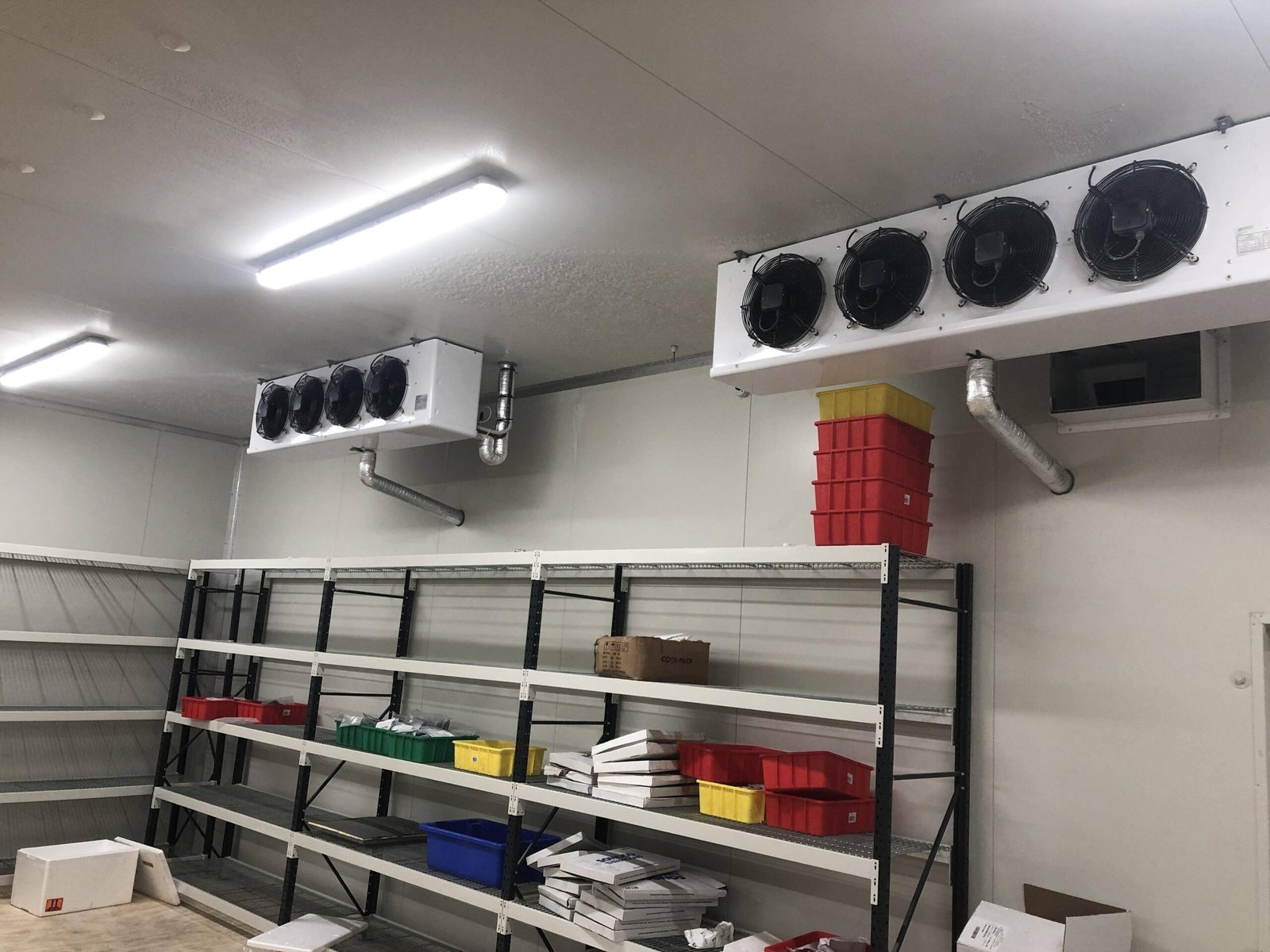
Forget the fluffy marketing. Here’s what our procurement data and client feedback tell us about the top heating and cooling AC units across different sectors.

What the 2025 Global HVAC Market Data Tells Distributors

The global HVAC market hit $137.4 billion in 2024, and projections for 2025 show a 6.2% compound annual growth rate. But the growth is not evenly distributed. Residential ductless splits still dominate volume, but commercial VRF systems and industrial packaged units are where the real profit margins sit for exporters.
I pulled our internal shipment data from last quarter. We export primarily to Southeast Asia, the Middle East, Latin America, and parts of Africa. Here’s the breakdown of what our partners are buying most:
| Region | Top Selling Category | Unit Price Range (FOB) | Average Order Quantity per Container |
|---|---|---|---|
| Southeast Asia | Mini-split heat pumps (1.5-3 ton) | $280 – $450 | 120-150 units (40ft container) |
| Middle East | High-static ducted units (3-5 ton) | $650 – $1,100 | 60-80 units |
| Latin America | Window-type HVAC with electric heating (1-2 ton) | $120 – $200 | 200-300 units |
| Africa | Low-GWP R32 split ACs (1-2 ton) | $200 – $350 | 100-130 units |
| Europe (incoming) | Inverter heat pumps (4-6 kW) | $450 – $700 | 80-100 units |
Notice the pattern. The demand for inverter technology isn’t just a trend—it’s now a requirement. In 2024, the Chinese export volume of inverter AC units grew 23% year over year. Non-inverter units are still selling in price-sensitive markets, but their share is dropping fast because of stricter energy labeling laws in importing countries.
One thing we see every week: distributors who buy non-inverter units today are getting stuck with unsold inventory six months later. The market is shifting to variable-speed compressors, and if you’re still ordering fixed-speed units, you’re competing on price alone. And that’s a race to the bottom.
Another data point: the average energy efficiency ratio (EER) required for export-grade units in 2025 is now 3.5 or higher in most target markets. In 2020, that number was 2.8. If you’re sourcing units with EER below 3.2, you’re already behind.
Let’s move into the specific unit categories that our most successful distributor clients focus on.
The Three AC Unit Categories That Dominate Export Orders
1. Mini-Split Heat Pumps – The Global Workhorse
Mini-splits account for about 45% of our total export volume. They’re the most versatile product for residential and light commercial applications. But not all mini-splits are created equal. The ones that sell fast have these three features: R32 refrigerant, DC inverter technology, and a heating capacity that works down to -15°C ambient temperature.
I’ll give you a real example. Our best-selling model for Southeast Asia is a 2-ton R32 inverter mini-split with a cooling SEER of 18.5 and heating COP of 4.2. The FOB price is $320. Our distributor in Vietnam sold 2,400 units in Q1 2025 alone. Why? Because the local government just banned R410A in new installations starting July 2025. They were stocking up ahead of the ban.
If you’re sourcing mini-splits for tropical markets, pay attention to the cooling-only models. They’re cheaper by about 15-20%, and in places like Indonesia or the Philippines, heating function is never used. But here’s the catch: many factories only produce heat pump versions because the compressor and coils are the same anyway. You’re paying for a heating function you don’t need, and the weight is slightly higher, which increases shipping costs. We offer both options. Our cooling-only 2-ton unit weighs 28 kg less than the heat pump version, saving about $12 per unit on ocean freight.
2. Packaged Rooftop Units – Big Margins for Commercial Projects
This is where our margins jump to 25-30% compared to 12-15% on mini-splits. Packaged rooftop units (RTUs) are the workhorses of commercial buildings, warehouses, and retail chains. The global RTU market is expected to hit $28 billion by 2027, driven by replacement demand in the US and new construction in the Middle East.
The key specification for export RTUs is the ability to handle high static pressure. Most Chinese factories make RTUs with static pressure of 0.8-1.2 inches of water column. That’s fine for single-story buildings. But for multi-story applications or buildings with long duct runs, you need 1.5-2.0 inches. We developed a line of high-static RTUs specifically for Middle Eastern and African markets, where buildings often have complex duct layouts. Our 10-ton model delivers 2.0 inches static at full airflow. The extra engineering costs us about $80 per unit, but we sell it at a $300 premium, and clients come back for repeat orders because they don’t get callbacks about low airflow.
Another trend: gas-electric RTUs are still popular in cold climates, but heat pump RTUs using R32 are gaining ground fast. In 2024, heat pump RTU exports from China increased 40% year over year, according to China Customs data. The reason is simple: many countries in Europe and North America are phasing out natural gas furnaces in commercial buildings. If you’re a distributor targeting Canada, northern US, or Scandinavia, you need heat pump RTUs with auxiliary electric heating. We recommend a 15 kW backup heater for units up to 8 tons.
3. VRF (Variable Refrigerant Flow) Systems – The High-End Game
VRF systems are where the technical expertise pays off. A single VRF system can serve multiple indoor units, and the installation requires skilled technicians, which means higher service margins for your local partners. The global VRF market was valued at $22 billion in 2024, with China and Japan dominating production.
For export, the biggest challenge is voltage and frequency compatibility. We produce VRF units for 380V/50Hz (most of Asia, Middle East, Africa) and 460V/60Hz (North America). The 60Hz versions require a different compressor and control board, so lead times are longer. One piece of advice: if you plan to sell VRF in North America, order at least three months in advance. The scheduling is tight because many factories prioritize domestic and Asian orders.
What’s hot right now is the VRF heat recovery system, which can simultaneously heat and cool different zones. In hotels and office buildings, this is a huge energy saver. Our 10-ton heat recovery VRF unit has a heating COP of 4.5 and cooling EER of 3.8. The price per ton is around $1,200 FOB, which is competitive against Japanese brands that often charge $1,800 or more. The catch: you need to provide training to your local installation teams. We offer free online training and a 20-page commissioning guide in English and Spanish.
Energy Efficiency Regulations That Impact Your Bottom Line
If you ignore the latest energy standards, you’re going to lose money. Let me give you three specific regulations that changed in the last 12 months and directly affect what you should stock.
First: The US DOE 2025 standard for residential AC units. Starting January 1, 2025, the minimum SEER2 for split systems in the northern US went from 14 to 15, and in the southern US from 15 to 16. That means any 13 or 14 SEER legacy units you have in inventory are now illegal to install. We saw a rush of American importers trying to dump old stock at discount in Canada and Latin America. If you’re sourcing for the US market, make sure any unit you buy is labeled with SEER2 (not SEER) and meets the 2025 minimum.
Second: The EU F-Gas Regulation phase-down. The European Union cut the quota for HFC refrigerants by 31% in 2024, and another 21% cut is scheduled for 2027. This effectively forces all new installations to use R32 or R290 (propane) for small systems, and R454B or R513A for larger ones. We’ve already shifted our entire EU-bound production to R32 and R454B. If you’re exporting to Germany, France, or the UK, and you still have R410A units, you’ll struggle to sell them after mid-2025. Some distributors are already seeing a 20-30% price drop on R410A stock.
Third: India’s BEE star rating update. India is our third-largest export destination. In April 2024, the Bureau of Energy Efficiency raised the minimum star rating from 3 to 4 stars for split ACs up to 2 tons. A 5-star unit must now have an ISEER above 5.0. The good news: Chinese inverter units easily meet this. The bad news: many small Indian brands import non-inverter units from China and sell them as “economy” models, but those can no longer be registered for BEE labeling. That means they can’t be sold legally in retail stores. Our clients in India tell us that demand for 3-star units has crashed by 40% in the last year.
Here’s a quick table showing the refrigerant transition timeline for major markets:
| Market | Current Dominant Refrigerant | Next Phase | Expected Complete Phase-out |
|---|---|---|---|
| USA | R410A, R32 | R454B, R32 | 2028 (R410A bans for new equipment) |
| EU | R32, R454B | R290, R1234yf | 2027 (new HFC quota) |
| China (domestic) | R32 | R290 | 2030 (target) |
| India | R32 | R290 | 2027 (new BEE rules) |
| Southeast Asia | R410A, R32 | R32 | 2028 (most countries) |
If you’re a distributor, now is the time to clean out any R410A inventory you have and start betting on R32 or R290. The factories have already switched. We haven’t produced an R410A unit for export since August 2024, except for special requests from Africa where regulations are slower.
Real-World Performance Metrics You Need to Compare
When we talk to first-time importers, they usually ask about price first. Price matters, but the real difference that affects your repeat orders is performance consistency. I’m going to show you the numbers we track internally for quality control, and you should ask your supplier for similar data.
We test every production batch for the following parameters. Here’s the average for our top-selling 2-ton R32 inverter mini-split over the last 200 units:
| Parameter | Test Result | Industry Standard | Notes |
|---|---|---|---|
| Cooling capacity at rated conditions | 23,800 BTU/h | 24,000 BTU/h ±5% | Slightly under, but within spec |
| Heating capacity at 47°F outdoor | 26,100 BTU/h | 24,000 BTU/h (HSPF region) | Good over-performance |
| Power consumption (cooling) | 1,820 W | 1,920 W max | 5.2% lower than spec, good for energy label |
| EER (cooling) | 13.1 | 12.0 minimum | Exceeds DOE 2025 threshold |
| SEER2 | 18.2 | 16.0 minimum | Qualifies for Energy Star |
| COP (heating) at 47°F | 4.21 | 3.8 typical | Excellent |
| Compressor discharge temperature | 192°F | < 220°F safe zone | Well within limits |
| Noise level indoor unit (high fan) | 42 dB(A) | 45 dB(A) typical | Quiet operation, important for residential |
| Refrigerant charge tolerance | ±3% | ±5% acceptable | Consistent filling, reduces field issues |
Why does this matter to you? Because if a unit performs below spec, you get warranty claims. Our warranty claim rate dropped from 2.1% in 2022 to 0.8% in 2024 after we tightened our test criteria. For a distributor importing 1,000 units a year, that’s the difference between 21 returns and 8 returns. Each return costs you roughly $45 in shipping and handling. Plus the lost customer trust.
One more thing: ask your factory for the AHRI certificate if you’re targeting North America. Many Chinese manufacturers claim their units meet AHRI standards, but only about 30% actually have valid certificates. We maintain AHRI certification for all our inverter models sold in the US and Canada. It costs us about $3,000 per model per year, but it’s non-negotiable if you want to work with large HVAC distributors who require listed equipment.
How to Pick the Right Units for Different Climate Zones
Not all AC units work well everywhere. This seems obvious, but we see distributors ordering the same model for Dubai and for Oslo. Here’s a practical guide based on real install data from our clients.
Hot and humid climates (Southeast Asia, coastal Africa, southern US). You need units with high sensible heat ratio (SHR) above 0.75. That means they remove moisture effectively. Many standard units have SHR of 0.65-0.7, which leaves a clammy feeling. We offer a “high dehumidification” option on our 1.5-ton and 2-ton models that uses a larger evaporator coil and a slower fan speed, bumping SHR to 0.82. The extra cost is $18 per unit. Distributors in Vietnam and the Philippines specifically request this. Also, make sure the outdoor unit has a corrosion-resistant coating if within 3 km of ocean. We use a gold fin coating that costs $12 per unit but reduces corrosion failures by 90%.
Hot and dry climates (Middle East, parts of Africa, inland Australia). The biggest issue is ambient temperature. In Riyadh, summer outdoor temps hit 50°C (122°F). Standard AC units start losing capacity above 46°C and may trip thermal overload. We tested our units at 52°C in a chamber. The 2-ton model maintained 98% of rated cooling capacity at 52°C, which is excellent. For extreme markets, look for units with a wide compressor operating envelope. Ours is rated down to -15°C and up to 55°C. Also, dust protection is critical. We add a fine mesh filter on the outdoor unit coil intake for Middle East orders. Cost: $8 per unit.
Cold climates (Northern Europe, Canada, northern China, Russia). Heat pump performance at low ambient is the game. We use a flash injection (vapor injection) compressor on our 2-ton and 3-ton models for cold climate markets. This allows full heating capacity down to -15°C and partial capacity down to -25°C. Standard units without injection lose 40% of heating capacity at -15°C. Our cold climate model costs $55 more per unit, but it eliminates the need for backup electric heat in many applications. Distributors in Norway use our units for new construction in Oslo, where winter lows hit -20°C. The backup heat still engages at -15°C, but only for about 10% of the heating season.
High altitude (Andean region, Ethiopian highlands, Mexico City). Altitude above 2,000 meters reduces air density, which affects fan performance and cooling capacity. Standard units lose about 3% capacity per 300 meters above sea level. At 3,000 meters, you lose 30% capacity. We modify the fan motor and control board to compensate. Our high-altitude units include a barometric pressure sensor that automatically adjusts fan speed. We ship a lot of these to Bogotá (2,600 meters) and Quito (2,850 meters). The modification adds $40 per 2-ton unit and is absolutely necessary. One distributor in Mexico City (2,240 meters) tried standard units once. They had 50% callbacks for insufficient cooling.
Here’s a final recommendation for any B2B buyer: test a sample container before committing to a large order. Most factories are happy to produce 20-50 units for a test shipment. That’s how our best clients start. They install a few units in their local market, monitor performance for 2-3 months, and then scale up. We even offer a “test container discount” of 5% because we know a good product sells itself.
Frequently Asked Questions
Q: I’m a distributor in Saudi Arabia. Do I need R32 units or can I still sell R410A in 2025?
A: Saudi Arabia has not banned R410A yet, but the Saudi Standards, Metrology and Quality Organization (SASO) is expected to update energy efficiency regulations in late 2025 to phase out R410A for new installations by 2027. Right now, R410A units are still selling because they’re cheaper by about 10-15%. But you’ll be stuck with inventory in 18 months. I recommend starting a small R32 line now. Our R32 units already meet SASO energy requirements with SEER values above 14.
Q: What’s the minimum order quantity for VRF systems?
A: For VRF outdoor units, our MOQ is 50 units per model. But indoor units can be mixed – you can order any combination of ducted, cassette, or wall-mounted units to match your project needs. We usually suggest a first order of 30 outdoor units plus 100 indoor units to have a balanced inventory.
Q: How do you handle warranty claims for international buyers?
A: We have a two-tier warranty system. For the first 12 months, we replace defective units free of charge (you pay return shipping). For months 13-36, we offer partial credit toward new units. We also stock common spare parts (control boards, fans, compressors) at our bonded warehouse in Dubai. Our warranty claim processing time for approved cases is 7 business days.
Q: Can you customize the color or branding for OEM orders?
A: Yes, for orders above 500 units. Minimum color change MOQ is 200 units per color. We can silk-screen your logo on the outdoor unit front panel and indoor unit for an extra $2.50 per unit. Custom paint colors (like RAL codes) add $8 per unit. Lead time for OEM branding is 45 days from order confirmation.
Q: I’ve heard Chinese AC compressors have quality issues. Is that still true?
A: It depends on which factory. We use GMCC compressors (a joint venture with Toshiba) for our inverter models and Secop compressors (formerly Danfoss) for some commercial units. Those are global tier-one compressors. The cheap units you hear horror stories about use domestic Chinese brands like Hualing or Sanhua. Ask your supplier which compressor brand they use. If they can’t tell you or say “it depends on batch,” walk away.
Q: What’s the best shipping method for AC units to avoid damage?
A: Use a 40-foot high cube container with wooden crate packaging. Each unit should be bolted to a wooden pallet, then stacked two high with foam separators. We use polyethylene shrink wrap and corner protectors. Our damage rate for ocean shipments is under 0.3% when using proper crates. If your supplier packs units in cardboard boxes only, expect 2-5% damage rate. Protect your insurance claim by taking photos at the port of loading.
Q: Are there any import duties for AC units in Latin America right now?
A: Brazil has the highest tariff at 35% for air conditioners (NCM 8415.10.00). Mexico charges 15% if the unit is not manufactured in North America (USMCA). Colombia charges 10%. Chile has a 0% tariff under the China-Chile FTA. Argentina is unpredictable – they often impose temporary duties up to 35% plus a licensing process. We recommend using a customs broker in each country. Our export team can share referral contacts for major Latin American ports.