
What is a Refrigeration Condensing Unit? A Global B2B Buyer’s Guide for 2025
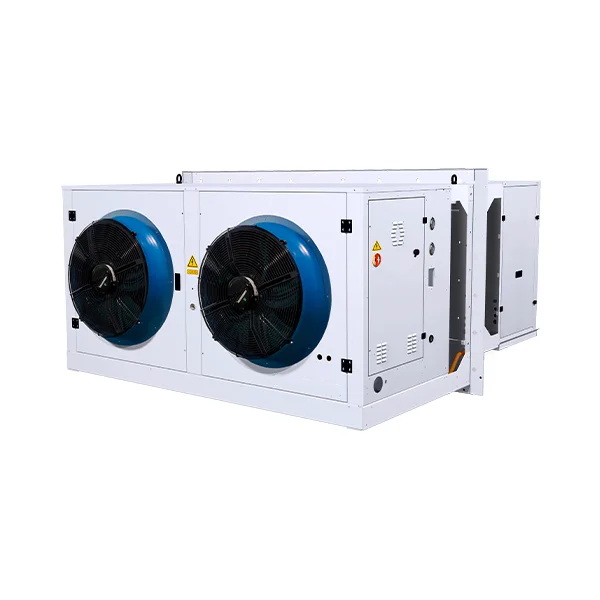
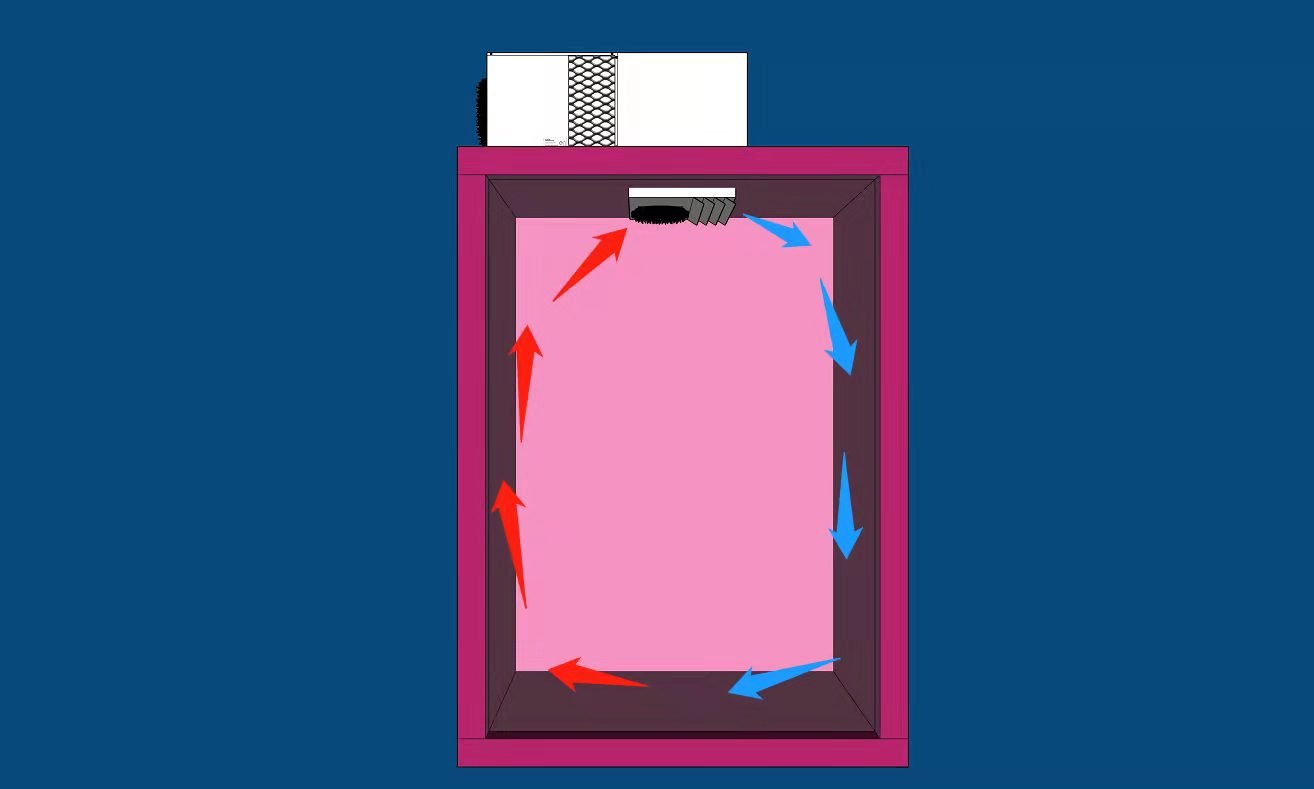
A refrigeration condensing unit is the core machine that turns warm air into cold air for industrial cooling, cold storage, food processing, and even medical storage. If you are a distributor or importer sourcing from China, you need to know exactly what this box of components does before you place a bulk order. The condensing unit is not a standalone cooler; it is the part of the refrigeration system that sits outside the cold room or freezer, compressing the refrigerant gas, condensing it back into liquid, and rejecting heat to the environment. Inside the unit you will find a compressor, a condenser coil (air-cooled or water-cooled), a fan or water pump, a receiver tank, and a set of controls. That’s it. But the performance of your entire cold chain depends on how well this unit is built.
Let’s get straight into the details. No fluff. If you are buying condensing units for your customers in Europe, Africa, Southeast Asia, or South America, you need to match the unit to the local climate, voltage, refrigerant availability, and application. A unit that works perfectly in Shanghai might fail in Dubai or Nairobi. So we are going to cover types, specifications, market data, and common mistakes. And at the end you will find some real-world Q&A from our technical team.
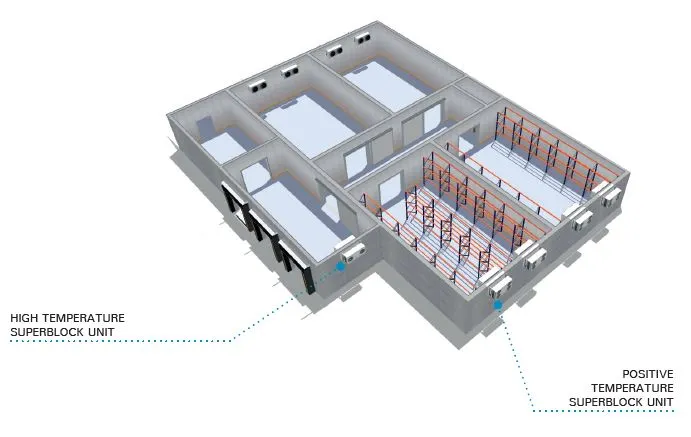
Types of Condensing Units – Which One Fits Your Customers’ Industry?
The first thing you need to decide is the type of condensing unit. The market is not one-size-fits-all. Different industries demand different configurations. Let’s look at the most common categories.
Air-cooled condensing units are the most popular globally. They use ambient air to cool the condenser coil. The fan pulls air across the fins, and the heat is dumped into the atmosphere. These units are simple, low maintenance, and cost less upfront. They are widely used in commercial refrigeration like convenience stores, supermarkets, and walk-in coolers. For B2B buyers, air-cooled units make sense if your target market has moderate ambient temperatures (below 40°C). If you are exporting to tropical countries, you need to check the design ambient temperature. Many Chinese manufacturers rate their units at 35°C or 38°C, but in places like Nigeria or India, outdoor temperatures can hit 45°C. In that case, you might need a derated capacity or a water-cooled unit.
Water-cooled condensing units use a cooling tower or city water loop to remove heat. They are more efficient than air-cooled in hot climates because water temperature is usually lower than air temperature. But they require a constant water source and more plumbing. These are common in large industrial applications like centralised cold storage, ice plants, and chemical process cooling. For B2B distributors, water-cooled units can be a niche product in regions where water is cheap and ambient temperatures are high. However, maintenance costs are higher due to scale and corrosion.
Remote condensing units have the compressor and receiver located separately from the condenser. This allows the condenser to be placed far away, like on a rooftop, while the compressor sits indoors. This design reduces noise and heat inside the building. It is popular in restaurants, hotels, and commercial kitchens where space is tight and noise matters.
Scroll vs reciprocating compressors is another major choice. Scroll compressors are quiet, efficient, and have fewer moving parts. They dominate the medium-temperature market (0°C to -10°C evaporator). Reciprocating compressors (piston type) are more robust for low-temperature applications like blast freezers (-25°C to -40°C). They can handle pressure ratios better. If your customers need deep freezing for seafood or meat, reciprocating is the standard. But scroll is catching up in low temp with improved technology.
Refrigerant type is critical for global trade. In 2025, the world is phasing out R404A and R507 in many countries due to high GWP. R448A and R449A are drop-in replacements but still have GWP around 1400. R290 (propane) is gaining traction for smaller commercial units because it is natural and cheap, but it is flammable. For industrial units, R717 (ammonia) is used in large systems but requires safety measures. As a B2B buyer, you must confirm what refrigerant your target market allows. Europe’s F-gas regulation is strict. The US EPA is also limiting high-GWP blends. If you ship a unit with R404A to Germany in 2025, you might face heavy taxes or rejection. Always ask your Chinese supplier to provide the exact refrigerant and corresponding pressure test certificate.
Key Specifications That Make or Break a Deal
When you are comparing quotes from different Chinese factories, you cannot just look at the price per unit. Here are the specifications you must verify, and we will explain why each one matters.
Cooling capacity (kW or BTU/h) – This is the most obvious. But be careful: Chinese suppliers sometimes rate capacity at ideal conditions (evaporating temperature -5°C, ambient 35°C). Your customer might need a different evaporating temperature (e.g., -20°C for a freezer). At lower evaporating temperatures, the capacity drops significantly. For example, a 5 kW unit at -5°C may only produce 3.5 kW at -25°C. Always ask for a capacity table covering at least three evaporating temperatures. If the supplier cannot provide this, walk away.
Power supply – Most Chinese factories offer 220V/1Ph/50Hz for small units, 380V/3Ph/50Hz for large ones. But for export, 60Hz markets (US, parts of Latin America, Philippines, Saudi Arabia) require 460V or 208V at 60Hz. A 50Hz compressor running on 60Hz will spin 20% faster, which can overload the motor and reduce life. A proper 60Hz unit needs a different compressor, motor, and fan. Some factories claim their units are “dual-frequency,” but in reality the compressor is the same. Test it. We have seen cases where a 50Hz unit shipped to Brazil failed in three months. Verify the voltage and frequency with the compressor manufacturer’s datasheet.
Condenser coil material – Copper tube with aluminum fin is standard. But in coastal areas with salty air, aluminum fins corrode quickly. In such environments, you need copper fins or a special coating. For Middle East customers, the condenser coil should have a protective coating against sand and UV. Also check the fin spacing. For dusty regions, wider spacing (e.g., 4mm instead of 2mm) reduces clogging.
Fan type and noise level – Axial fans are common. But for noise-sensitive areas (like hospitals, hotels), you need low-noise fans with variable speed. The sound pressure level should be below 55 dBA at 1 meter if required. Many Chinese standard units have noise around 65-70 dBA. You can ask for a soundproof enclosure, but it adds cost and weight.
Compressor brand – The compressor is the heart. Reputable global brands include Copeland (Emerson), Bitzer, Danfoss, Tecumseh, and Frascold. Chinese brands like Huayi, Highly, and Embraco (now part of Nidec) are also common in lower-price units. For B2B export, we recommend using at least a branded compressor for the first tier of customers. If you are going for cost-sensitive markets, a Chinese compressor can work if you have good after-sales support. Always confirm the compressor model and its original manufacturer.
Controller and protection – Modern units come with a microprocessor controller that manages defrost, temperature, fan speed, and alarms. In 2025, most buyers expect a controller with remote monitoring capability (Wi-Fi or Modbus). Chinese factories often use generic controllers like Carel, Eliwell, or Dixell. Make sure the language and temperature unit (°C or °F) can be changed. Also check if the controller has a high-pressure and low-pressure switch, oil pressure safety, and crankcase heater. These are essential for reliable operation.
Refrigerant charge and port – The unit must have service valves to charge and recover refrigerant. Some cheap units skip the liquid line filter drier. Do not accept that. A filter drier is mandatory for long system life. Also verify the type of Schrader valve and whether it uses a rotolock connection for easy installation.
Global Market Trends and Pricing Data You Can Use in 2025
Let’s talk numbers. The global refrigeration condensing unit market was valued at approximately USD 4.2 billion in 2024, with a CAGR of 5.8% expected through 2030, according to a report by Grand View Research. The growth is driven by cold chain expansion in Asia-Pacific, Africa, and Latin America. For B2B exporters, China remains the largest producer, accounting for about 38% of global manufacturing output. But competition is fierce.
Here is a sample of average FOB prices from Chinese suppliers for standard air-cooled condensing units (as of Q1 2025, based on our sourcing data):
| Cooling Capacity (kW) | Compressor Type | Refrigerant | Price Range (USD) | Lead Time (days) |
|---|---|---|---|---|
| 2-4 kW (small) | Scroll | R290 / R448A | $180 – $280 | 15-20 |
| 5-8 kW (medium) | Scroll or Recip | R448A / R404A | $350 – $550 | 20-30 |
| 10-20 kW (large) | Recip or Scroll | R448A / R404A | $650 – $1,100 | 25-40 |
| 25-40 kW (industrial) | Recip (Bitzer/Copeland) | R448A / R507 | $1,200 – $2,200 | 30-50 |
Note: Prices exclude refrigerant charge. Many Chinese factories ship without refrigerant to avoid hazardous goods restrictions. You need to factor in the cost of refrigerant at destination. Also, shipping from China to Europe costs about $0.50-$0.80 per kg for sea freight in 2025, depending on container load.
For water-cooled units, add 20-30% to the price because of the water valve, pump, and larger condenser.
Now, what about regional demand? In 2025, Southeast Asia (Indonesia, Vietnam, Thailand) is the fastest-growing market for condensing units, with an annual growth rate of 8.2%, driven by new cold storage facilities for seafood and fruits. Africa (Nigeria, Kenya, Ghana) shows strong demand for small to medium units, but buyers there are very price-sensitive and often prefer second-hand or refurbished units. Latin America (Brazil, Chile, Colombia) has strict import regulations on refrigerants, so R290 units are gaining share. Europe is moving toward natural refrigerants and high-efficiency units. If you target Europe, you must have an energy efficiency certification (like ErP or CE) and a declaration of conformity.
One more trend: Inverter-driven condensing units are becoming popular. They allow the compressor to vary its speed to match the cooling load, saving 30-40% energy. But they are more expensive, about 1.5x the price of a fixed-speed unit. For B2B buyers, consider inverter units for premium clients who value long-term energy savings.
Common Mistakes When Buying Condensing Units from Chinese Manufacturers
Even experienced importers slip up. Here are the top five mistakes we see in the field.
Mistake 1: Not matching the unit to the evaporator. A condensing unit must be paired with a properly sized evaporator (the cooling coil inside the cold room). If the evaporator is too small, the compressor will cycle on and off too frequently, causing short life. If it is too large, the refrigerant may not return properly. Always ask the supplier to provide a matching recommendation. Many Chinese factories will sell you a condensing unit without asking about the evaporator. Do not buy it unless they can confirm the balance.
Mistake 2: Ignoring the ambient temperature rating. We already touched on this. But let’s be specific: If your customer is in a desert like Saudi Arabia, a standard 43°C-rated unit will trip on high pressure. You need a unit designed for 50°C or higher ambient. This requires a larger condenser, a higher-torque fan motor, and possibly a subcooler. Some Chinese factories can build custom units, but you must specify.
Mistake 3: Overlooking the warranty and spare parts. Chinese suppliers often offer 12 months warranty, but the warranty is only valid if the unit is installed by an authorized technician. In many B2B export scenarios, the end-user installs it themselves. Then the warranty is void. Also, confirm that spare parts (compressor, fan motor, controller) are available for at least 5 years after purchase. Some small factories change models every year, and you cannot find a replacement fan motor later.
Mistake 4: Using the wrong refrigerant in a unit designed for another. If you buy a unit that was factory-charged with R404A and then you try to use R448A without proper adjustments, performance will suffer. If you want a multi-refrigerant capable unit, ask for a unit with a compatible compressor range (e.g., many scroll compressors can run both R404A and R448A with minor control changes). The factory should provide a P-H chart or a performance curve.
Mistake 5: Not checking the packaging for sea transport. Condensing units are often shipped in wooden crates. But the wooden crate must comply with ISPM 15 (heat treatment) for many countries. Otherwise, customs will reject the shipment. Also, the unit itself must be securely mounted to prevent movement. We have seen units arrive with broken feet, dented coils, or loose wiring. Ask for photos of the packaging process during production.
Professional Q&A – Real Answers for B2B Decision Makers
Q: Can a Chinese condensing unit be used with R290 (propane) refrigerant? What safety certifications are required?
A: Yes, but you need a unit specifically designed for flammable refrigerants. This means using explosion-proof electrical components, a sealed compressor, and a safety valve. The unit must comply with IEC 60335-2-89 or EN 378. For export to Europe, you need ATEX certification. For the US, UL certification. Most Chinese factories offer R290 units, but you must request the ATEX or UL documents. Also, shipping R290 units is tricky because propane is a hazardous good – you need special logistics. Many exporters ship the unit without refrigerant and ask the buyer to charge locally.
Q: How do I test the performance of a condensing unit before placing a bulk order?
A: Always ask for a factory test report. A reliable supplier will run the unit in their test chamber and provide a report showing capacity, power consumption, current, and pressure readings at the rated conditions. You can also request a third-party inspection from companies like SGS or TÜV. For a small order, you can ask for a pre-shipment sample and test it in your own facility. Make sure to duplicate the operating conditions (ambient temperature, evaporating temperature). If the unit fails the test, you have grounds to renegotiate.
Q: What is the typical lifespan of a Chinese condensing unit compared to a European brand?
A: A well-constructed Chinese unit with a branded compressor (Copeland or Bitzer) can last 8-12 years in normal conditions. A budget unit with a Chinese compressor might last 3-5 years. European brands like Bitzer or Frascold can achieve 15-20 years with proper maintenance. The key difference is the quality of the condenser coil (thicker copper, better fins) and the controller. For B2B export, we recommend offering two tiers: a premium line with international-brand compressor and a standard line with a Chinese compressor, to meet different budget markets.
Q: The supplier quoted a price that is 40% lower than others. Should I be suspicious?
A: Yes. Extremely low prices often come from cutting corners: thinner gauge steel, undersized condenser, no filter drier, generic compressor, no test, no documentation. In the long run, you will pay more in warranty claims and customer dissatisfaction. Request a detailed bill of materials (BOM) for that quote. If the compressor is a no-name brand and the condenser has less than 3 rows of coils, it is a red flag. Ask for photos of the production line. A 40% price difference usually means you are getting a different product.
Q: How do I handle the voltage difference between 50Hz and 60Hz markets?
A: The best approach is to order a dedicated 60Hz model from the factory. The compressor, fan motor, and contactor must be 60Hz-rated. If you cannot get a dedicated model, you can use a step-down transformer (e.g., from 460V to 380V) but that adds cost and reduces efficiency. For 60Hz countries, also note that the cooling capacity will increase approximately 20% compared to 50Hz at the same evaporating temperature, but the compressor power also increases. Always ask the supplier for a performance curve at both frequencies. Some modern inverter compressors can handle 50/60Hz automatically, but the control board needs to be programmed accordingly.